Why Telehealth Changed Everything for Veteran Mental Health
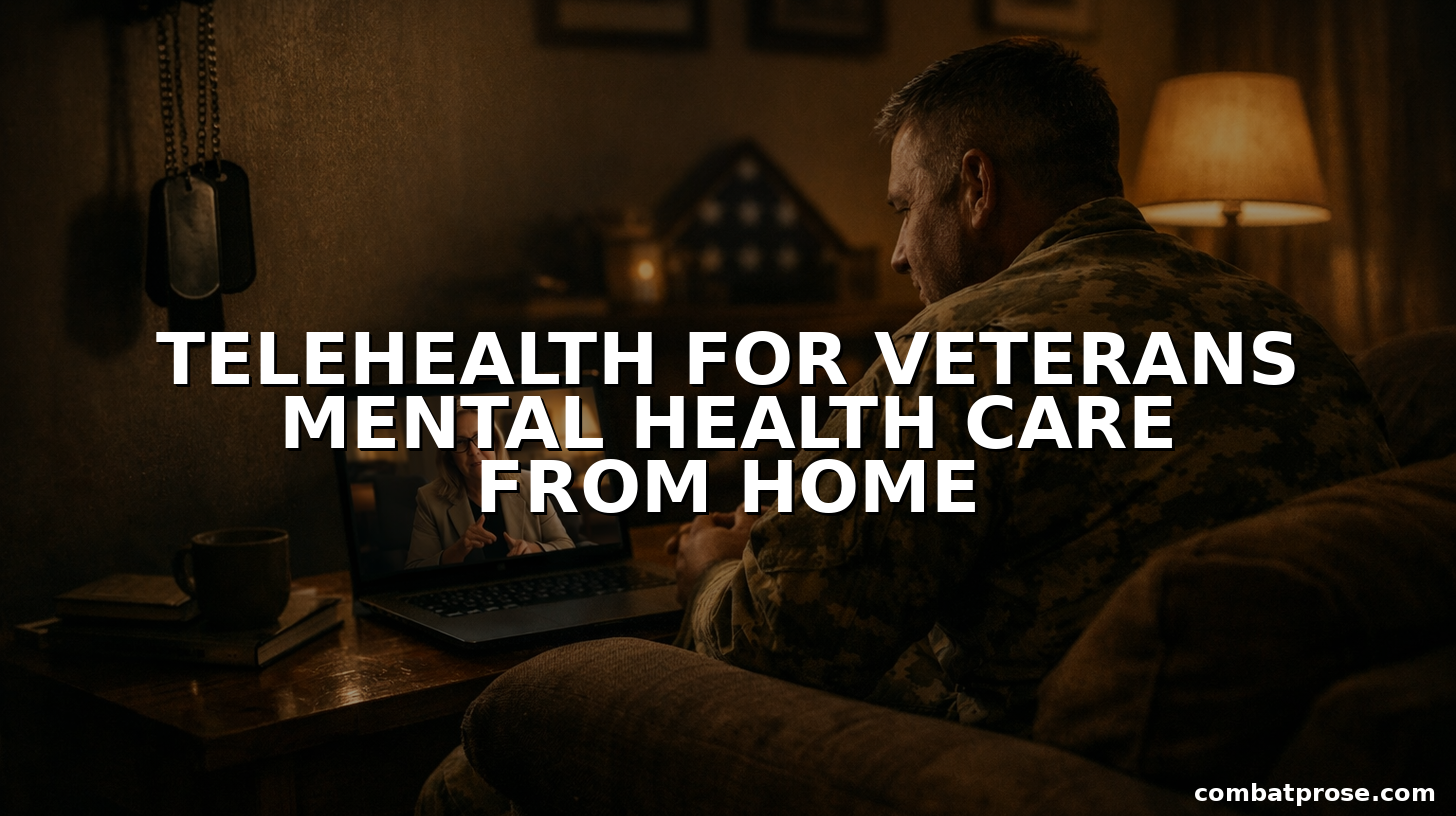
Let me be direct: for mental health care, telehealth is not a lesser version of in-person care. It is often better. The stigma of walking into a mental health clinic, the logistics of driving to a VA medical center, the waiting room full of other veterans who might know you—those friction points have stopped more people from getting help than any paperwork ever did. Veteran telehealth mental health removes most of those barriers entirely.
The numbers back this up. In fiscal year 2025, more than 2.9 million veterans used VA telehealth across 14.6 million episodes of care—a 10% increase from the year prior. Of those, more than 2.1 million veterans had over 11.7 million video visits directly to their homes through VA Video Connect. The satisfaction rate? 91.7% of veterans who used VA telehealth reported being satisfied, with 92.9% specifically satisfied with video visits. These aren’t participation-trophy numbers—that’s a system that actually works for the people using it.
Here’s the complete breakdown of your options, from the easiest to the least obvious.
VA Video Connect: Your First Call
If you’re enrolled in VA health care, VA Video Connect is the baseline. It’s the VA’s secure video conferencing tool, and it’s been deployed for mental health, primary care, specialty consults, and medication management.
How It Actually Works
- Talk to your current VA provider and ask to switch to telehealth visits. This is a joint decision—you and your provider agree that a video appointment covers what you need.
- Your provider sends you a link by email before the appointment. On the day of, you click it, enter your name, and you’re in the virtual room. No app download needed on non-Apple devices—it runs in your browser.
- Apple users need the VA Video Connect app from the App Store before the visit. Everything else works in a browser.
- You can schedule through the VA Online Scheduling app using Login.gov or ID.me credentials, or through your care team directly.
What Works Especially Well Through VA Video Connect
- Individual therapy sessions for PTSD, depression, and anxiety
- Psychiatric consults and medication management
- Group therapy and group counseling
- Cognitive behavioral therapy (CBT) and evidence-based PTSD treatments like Cognitive Processing Therapy (CPT)
- Follow-up appointments that don’t require physical examination
What If You Don’t Have Reliable Internet?
The VA built around this problem. The ATLAS program places private telehealth booths in VFW halls, community centers, and libraries—secure, private locations with VA-grade internet where you can connect to your provider without needing home broadband. If you live in a rural area and this is a barrier, ask your VA care team about the nearest ATLAS site. The VA also issues tablets to veterans who lack devices and can assist with connectivity in some cases.
Community Care Telehealth: When the VA Queue Is Too Long
Here’s something that doesn’t get explained clearly enough. If the VA can’t get you a mental health appointment within 20 days, or if you live more than 40 minutes from the nearest VA facility that offers what you need, you may qualify for the VA Community Care Program. This lets you see a civilian mental health provider—including telehealth providers—at the VA’s expense.
With the VA’s new External Provider Scheduling (EPS) system now deployed at all VA facilities as of early 2026, community care appointment booking has gotten meaningfully faster. VA schedulers can now see community provider availability in real time and book up to 25 appointments per day versus what was previously a much slower process.
To request Community Care: contact your VA primary care team or call 1-800-698-2411. Ask for a referral to the Community Care Program. If approved, the VA will match you with a community provider and cover the cost. The community care telehealth option means you can still receive virtual appointments—you’re not required to go in-person just because you’re going outside the VA system.
One important note: Community providers seeing veterans through this program are not required to have training in military culture, combat trauma, or suicide prevention. Ask specifically about their experience with veterans before committing to a provider through community care. It matters.
TRICARE Telehealth: What’s Available for Eligible Veterans
If you’re a military retiree or a dependent covered under TRICARE, you have a parallel telehealth pathway that’s worth knowing. TRICARE virtual health covers office visits, mental health care, and a range of services through secure video and phone. Referral requirements for virtual visits are the same as for in-person care.
TRICARE East subscribers specifically have access to several telehealth mental health platforms, including:
- Telemynd — therapy, psychiatry, and medication management for adults and children 5+. No referral required for non-active duty or dependents.
- Doctor on Demand — connects you with therapists and psychiatrists via smartphone, tablet, or computer
- Talkspace — therapy for adults and teens 13+, plus psychiatry and medication management for adults 18+
Active-duty service members need referrals for urgent care and mental health care. TRICARE Prime ADFMs, retirees, and families generally don’t need referrals or authorizations for virtual health.
Making Virtual Therapy Actually Work
This is where most guides stop—but half the battle is the setup, not the scheduling. Here’s what actually makes a difference for veteran telehealth mental health sessions.
Set Your Environment
Find a private space where you won’t be interrupted. Close the door, put up a sign if you need to, and use headphones. The person on the other end needs to feel like they’re in a room with you, and you need to feel like the session is contained.
Test Your Tech Before Your First Session
VA Video Connect has a test link you can use before your actual appointment. Use it. Test your camera, microphone, and internet connection at least 15 minutes before you need to be on. Nothing derails a session like spending the first 10 minutes troubleshooting audio. The VA has a troubleshooting video that covers the seven most common technical issues—find it through the VA Connected Care website.
Treat It Like a Real Appointment
The biggest threat to telehealth effectiveness is treating it like it’s optional because it’s convenient. Show up on time. Be in your space five minutes early. Don’t schedule sessions right before you have to be somewhere else. The flexibility of telehealth is only an asset if you protect the session’s integrity.
Use the VA’s 60+ Mobile Apps Between Sessions
The VA has built an ecosystem of mobile apps that extend care between appointments. For mental health specifically, apps like PTSD Coach, the VA Safety Plan app, and Mindfulness Coach provide tools you can use between sessions. These aren’t replacements for therapy—they’re supplements that reinforce the work you’re doing. VA’s mental health services page has the full app directory.
Don’t Wait for a Crisis to Use Telehealth
Veteran telehealth mental health is most effective as an ongoing, consistent touchpoint—not as an emergency valve. Regular sessions, even when things are going relatively well, build the kind of therapeutic relationship that actually works in hard moments. If you’re only reaching out when you’re in crisis, you’re using the tool wrong.
Private Telehealth Platforms That Accept VA/TRICARE
If you’re not currently enrolled in VA health care, or you want to access care outside the VA system entirely, private telehealth platforms are an option. Some accept TRICARE directly; others have sliding-scale fees or work with VA Community Care referrals. When evaluating a private platform:
- Ask specifically whether the therapist or psychiatrist has experience treating combat veterans or PTSD
- Confirm whether they accept your specific TRICARE plan (East/West/Prime/Select all have different network requirements)
- Ask about their protocol if you’re in crisis—what happens outside business hours?
- Look for providers with military cultural competency training, not just general mental health credentials
Services like MindWell Psychiatric Services accept TRICARE and CHAMPVA and offer same-day appointments for cash-pay patients. These options exist for when the VA pipeline is too slow and you need something now.
Vet Centers: The Telehealth Option Nobody Talks About
One more option worth knowing: Vet Centers offer individual, group, and family counseling without requiring VA enrollment. There are 300+ locations and 83 mobile units. They also offer telehealth options. You can access Vet Center services even if you’ve never enrolled in VA health care—and they operate in a non-clinical, community-based environment that some veterans find more accessible than a medical center.
To find the nearest Vet Center, use the VA’s Vet Center locator or call 1-877-WAR-VETS (1-877-927-8387).
A decent webcam makes a real difference — the Logitech C920s HD Pro Webcam is solid and affordable.
If you’re doing sessions from a shared space, a Bluetooth Headset with Microphone keeps things private.
The Bottom Line
Veteran telehealth mental health has reached a point where it works. The stats, the satisfaction rates, the reach—it’s all there. The only question is whether you’re actually using it. If you’re enrolled in VA health care and you’re not using VA Video Connect for at least some of your mental health care, you’re making your life harder than it needs to be. If you’re not enrolled, community care and TRICARE options still get you covered.
The barriers to mental health care in 2026 are lower than they’ve ever been for veterans. Make use of it.
Dealing with VA staffing shortages and long wait times? Read VA Mental Health Workforce Shortage: What It Means for Your Care in 2026. And for a firsthand look at what’s worked, check out Mental Health Resources That Actually Work (From a Vet Who’s Used Them).
If you’re a veteran in crisis, call or text 988 and press 1, chat at VeteransCrisisLine.net, or text 838255. Free, confidential, 24/7—no VA enrollment required.
Gear & Resources for Virtual Therapy
- Logitech C920s HD Pro Webcam — Reliable HD webcam for telehealth appointments and video calls — good picture, built-in mic.
- Bluetooth Headset with Microphone — Noise-canceling headset for telehealth sessions, interviews, or running your business from anywhere.
- The Body Keeps the Score — Dr. Bessel van der Kolk’s groundbreaking work on how trauma reshapes the body and brain — and paths to recovery.
- Once a Warrior, Always a Warrior — Dr. Charles Hoge’s practical guide to navigating the transition home, written specifically for combat veterans and their families.
- Moleskine Classic Notebook — Simple, durable notebook for journaling, goal tracking, or business planning.
This post contains affiliate links. If you purchase through these links, CombatProse may earn a small commission at no extra cost to you. See our Affiliate Disclosure for details.